Tariffs have been fueling economic uncertainty over the past year, costing companies hundreds of billions. With the latest Supreme Court ruling and the administration’s reinstatement of tariff measures, the conversation is far from over.
What has changed dramatically is how quickly economic decisions collide with public perception, pricing sensitivity, and real-time scrutiny across digital media channels.
The immediate, on-demand nature of news cycles and social media has reshaped corporate communications in the technology sector. When external forces (like tariffs) drive internal decisions such as pricing increases or supply chain adjustments, manufacturing leaders are judged not only on the strategies to cope, but on how clearly they explain it to consumers and stakeholders.
For technology companies serving the manufacturing sector, these conversations often shape the broader industry narrative. Reporters and analysts frequently rely on technology providers to explain how organizations are adapting to supply chain disruption and economic pressure.
What’s Driving Manufacturing Coverage
Messaging tied to a pricing increase, supplier changes, or restructuring can spread quickly online and influence public perception. A message that resonates negatively with investors, employees, or customers can lead to online criticism or revenue impact,
Because of this, corporate communications has become a critical part of business strategy. Technology and manufacturing companies are expected to explain not only what they are doing but why they are doing it.
Two recent examples illustrate how tariff related messaging can shape the media narrative.:
Example 1: Walmart
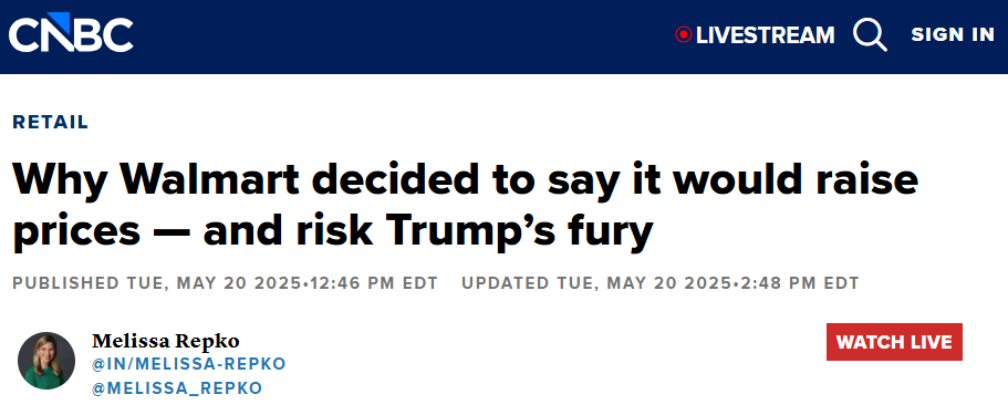
Walmart provides a high-profile example of how tariff messaging can quickly become a national conversation.
During its Q1 earnings call in May 2025, the retailer alluded to potential price increases. CEO C. Douglas McMillon first thanked President Trump directly for “the progress made recently” before outlining the challenges tariffs could still create.
Media interviews that followed struck a stronger tone. CFO John David Rainey told CNBC tariffs were “still too high,” and warned that consumers would likely see pricing increases within the next month.
The timing of these statements was notable. Walmart had just exceeded earnings expectations and celebrated its first profitable quarter for its e-commerce business.
- What was the response? The administration was among the most vocal critics of the message, prompting a public exchange that drew broader consumer attention to the potential impact of tariffs. Reactions were mixed: some observers supported the company’s economic explanation, while others questioned the focus on tariffs given the company’s recent profitability. Walmart’s stock price dipped following the president’s response, reflecting some investor caution.
Example 2: Stanley Black & Decker
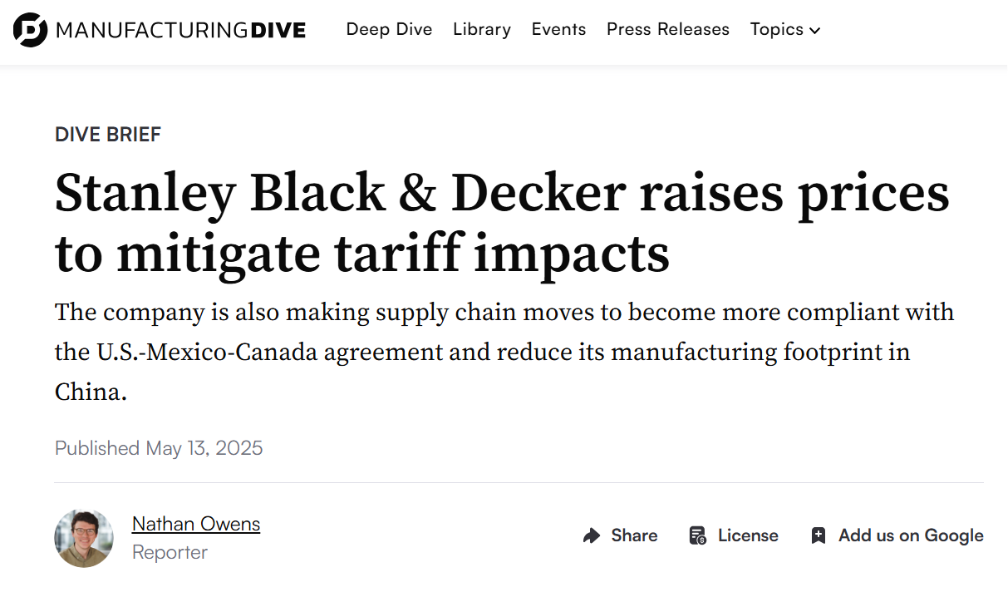
Stanley Black & Decker offered a different approach when responding to tariff pressures.
During its April Q1 earnings report release, the tools and outdoor expert released a statement that it would be implementing a single-digit price increase in April with future plans to introduce a second price increase in Q3. Stanley Black & Decker also announced the it’s reshoring efforts to reduce tariff costs from China by adjusting its supply chain toward Mexico.
Stanley addressed tariffs early and communicated future pricing expectations clearly. By announcing this pricing strategy during the quarterly earnings call, leadership used business performance as a context for explaining the pricing decision to investors.
- What was the response? The response to the news was largely neutral in media coverage. Reporting focused on the company’s supply chain strategy rather than the price increases themselves. Investor response appeared in the stock price, which saw an initial dip following the earnings announcement.
Messaging Guidelines for Communications Leaders
These examples provide valuable lessons for technology companies operating in the manufacturing vertical. When economic pressures influence business decisions, messaging clarity becomes critical.
Get Ahead of the Message
Releasing messaging early before an issue is always preferred to having to shift into crisis communications after the fact. Proactive messaging about pricing strategies or supply chain changes helps establish transparency among stakeholders.
Quantify Business Impacts
Data strengthens credibility. Providing measurable impacts allows stakeholders and media audiences to understand the scale of the decision and its economic context.
Explain Strategy Decisions
Stakeholders want to understand the reasoning behind major changes. Explaining the strategic logic behind these decisions builds trust and reduces speculation.
It is rarely effective to announce cost increases without explaining other measures being taken to manage economic pressure.
Speak to Multiple Stakeholders
Different audiences interpret messaging differently.
Investors may receive information through quarterly earnings calls and financial briefings. Analysts often expect direct engagement and regular updates. Customers may respond better to direct communications such as customer letters or product updates via social media.
Ensuring that messaging addresses the concerns of each audience helps maintain credibility across the stakeholder landscape.
Look Ahead to Next Steps
Clear communication about next steps reduces uncertainty. Whether discussing pricing adjustments, supply chain changes, or broader strategy, outlining the cadence of future decisions helps stakeholders understand what to expect.
Messaging that explains where the company is heading reduces speculation and reinforces confidence.
The Bottom Line for Communications Leaders
Economic uncertainty and global trade tensions continue to influence the technology and manufacturing sectors. In this environment, communications strategy becomes just as important as operational strategy.
For companies operating within supply chain and manufacturing ecosystems, messaging shapes how stakeholders interpret pricing decisions, supply chain adjustments, and long-term business strategy.
Clear communication helps organizations navigate economic disruption while maintaining trust with customers, investors, and partners.
If your organization is working to clarify its messaging during periods of economic uncertainty, learn more about our messaging services at 10Fold Communications.