Key Article Takeaways:
- Connected health has shifted from wearables to integrated ecosystems combining hardware, software, and data.
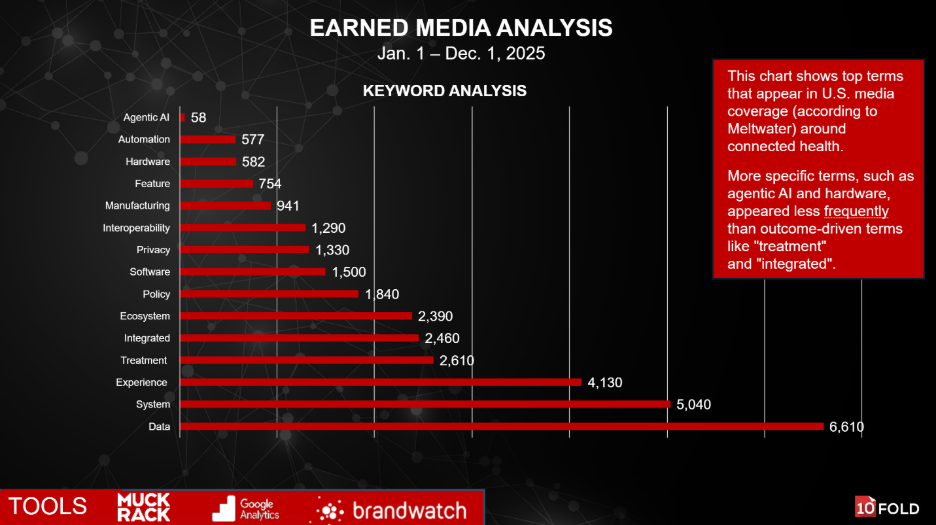
- Brand messaging often lags behind tech innovation, focusing on features rather than ecosystem value.
- Strategic storytelling clarifies how connected health technology improves lives and fits within broader health systems.
- Brands must lead with outcomes, define their ecosystem role, and simplify complex health data to build trust and authority.
What Is Connected Health Today?
Connected health is no longer defined by devices alone. While smartwatches, fitness trackers, and biometric sensors once dominated the conversation, the market has evolved into integrated ecosystems that connect hardware, software platforms, providers, payers, employers, and patient data.
Early reporting, including analysis from Fierce Healthcare, emphasized device accuracy and clinical adoption. Today, coverage from outlets such as Reuters and research publications like Nature increasingly focuses on interoperability, data integration, long-term outcomes, and system-level coordination.
In other words, connected health now refers to a technology-enabled ecosystem that delivers continuous wellness experiences across settings, rather than standalone wearable products.
Yet many brands still communicate as if the market revolves around product launches and feature differentiation. This creates a widening gap between innovation and market perception.
The Messaging Gap: Innovation Is Outpacing Brand Positioning
Connected health technology has moved toward interoperability, preventative care, and longitudinal data analysis. However, messaging often remains anchored in technical specifications such as sensor accuracy, app updates, and hardware improvements.
Product differentiators matter, but they rarely explain why a company matters within the larger health ecosystem.
Media outlets and industry analysts increasingly prioritize perspective over announcements. Integration strategies, policy shifts, cross-platform coordination, and real-world outcomes are shaping coverage. A report from MIT Technology Review highlights how system-level thinking is becoming central to innovation narratives.
At the same time, 91% of healthcare leaders surveyed agree interoperability is a significant challenge, and nearly 60% say solving it will be tough yet manageable. This reinforces a critical truth: readiness alone doesn’t guarantee seamless integration across systems.
When messaging focuses narrowly on product features, brands miss the opportunity to explain how they contribute to solving ecosystem-level challenges. The result is positioning that feels tactical instead of strategic, and content that struggles to stand out in a crowded media landscape.
Why Strategic Storytelling Drives Connected Health Authority
As connected health ecosystems become more complex, clarity becomes a competitive advantage.
PR and strategic messaging no longer simply support launches. They shape how categories are understood.
The brands gaining sustained attention consistently are those that explain:
- How technology improves lives
- Where it fits within broader systems
- Why it matters for providers, employers, and consumers alike
Strong storytelling translates technical data into human impact and positions companies as interpreters of change rather than reactive vendors responding to trends. This is especially important as regulatory and market dynamics shift quickly.
The Repositioning Mandate for Connected Health Brands
The evolution from devices to ecosystems requires a deliberate shift in positioning. Brands must move from being perceived as technology providers to becoming interpreters of the connected health future.
That shift requires three key changes:
1. Lead With Outcomes, Not Features
Technology should support the story, not define it.
Messaging must highlight measurable impact and real-world value. Apple Health provides a great example: it has shifted from simply selling devices like the Apple Watch to empowering users with a comprehensive health platform that integrates with their daily lives and healthcare systems.
This strategic shift focuses on outcomes, positioning Apple as a leader in the broader wellness ecosystem, rather than just a device manufacturer.
2. Define Your Role Within the Ecosystem
Customers and partners want to understand how your brand connects with providers, platforms, or employers, and why that relationship matters.
Oura Ring exemplifies this by offering personalized wellness through AI-driven coaching, while also integrating with healthcare providers. This positions Oura as a key player in the ecosystem, delivering value not just to individuals but also to organizations, insurers, and wellness partners.
3. Translate Complexity into Strategic Clarity
Connected health intersects with data privacy, interoperability, and behavioral science.
Brands that explain complexity in accessible terms build trust and authority. IQVIA excels in transforming vast healthcare data into actionable insights through intuitive dashboards, making it easier for clients to navigate the complexities of clinical, pharmaceutical, and patient data. By clarifying complexity, IQVIA becomes a trusted partner in the healthcare ecosystem.
From Product Messaging to Ecosystem Leadership
Many connected health organizations are already innovating at the ecosystem level. However, their communications strategies often remain product-centric.
When messaging focuses solely on launches and features, brands risk blending into a marketplace full of similar claims. When narrative expands to address category evolution, long-term outcomes, and ecosystem transportation, companies help shape how the market is understood.
Effective PR in connected health aligns visibility with ecosystem leadership. It allows brands to speak not only to customers, but to enterprise buyers, healthcare executives, and media analysts tracking long-term trends, while reinforcing strategic relevance.
From Participant to Category Shaper
The connected health revolution is not defined by a single device or platform. It’s defined by the relationships between them and the outcomes they enable.
Organizations that evolve their messaging to reflect this reality move beyond being seen as technology vendors. They become thought leaders, helping audiences understand where wellness is headed.
The opportunity is not just to join the conversation around connected health, but to guide it. And the brands that bring clarity to a complex ecosystem will be the ones that define the next chapter of the market.